
When you’re trying to move fast, it’s nearly impossible to have the kind of detailed breakdowns we imagine in a perfect world—clear project chunks assigned neatly to various teams. Upfront planning is still important—you create PM specs, dev-design documents, build prototypes, and have discussions with dependent teams to map out what’s needed. But even with all this careful preparation, there are still challenges when it comes to getting the pieces to fit together. This is especially true with newer technologies like Generative AI, where the unknowns you uncover along the way can disrupt even the best-laid plans.
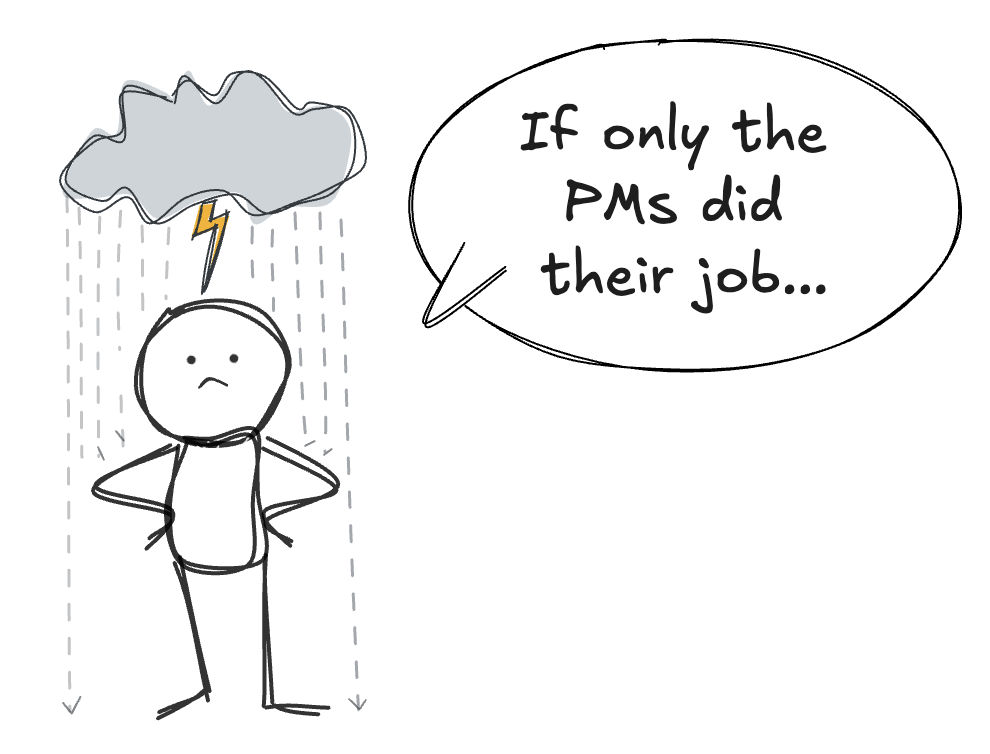
One common issue is that a sub-team might deliver exactly what they were tasked with, but it doesn’t integrate well with the rest of the project because certain aspects were unclear or evolved during development. Despite everyone’s best efforts, the project can still fail to come together smoothly. You lose time that could have been spent building something else, and midway through, you might even consider abandoning the work done so far and assigning blame to the PM for the state of the project.
One strategy I’ve seen work really well to combat this is the concept of a squad leader. Think of it like a General Contractor (GC) in construction or a squad leader in the military. In both these roles, the primary function is to bring clarity and coordination to a group of people working on different aspects of the same mission. The goal is to ensure all the moving parts come together successfully, even when individual teams focus on their smaller pieces.

The Squad Leader Concept in Action
In the military, a squad leader takes responsibility for a small group of soldiers, coordinating their efforts to achieve a mission. They bridge the gap between the high-level objectives set by their commanders and the hands-on execution by their team. Similarly, in construction, a general contractor ensures that different subcontractors—electricians, plumbers, carpenters—are all working towards building the final structure. The GC doesn’t just ensure tasks are completed; they make sure every part fits within the overall plan (See Army MIL).
How This Applies to Software Projects
For software projects, especially the complex ones that span multiple teams and services, a squad leader plays a critical role. Here’s what they typically do:
- Own the End-to-End Design: The squad leader translates the PM’s high-level requirements into a phased execution plan, developing a cohesive design that spans all necessary services and components. This includes gathering input from experts and building consensus with the teams that own those services to ensure alignment and avoid surprises down the road.
- Cross-team Coordination: The squad leader ensures that each team understands how their work fits into the broader project, preventing mismatches and integration issues by keeping communication clear and frequent.
- Aligning Goals and Timelines: It’s the squad leader’s job to make sure all teams are not only aligned on the overall goals but also on timelines and deadlines, reducing bottlenecks and ensuring smooth handoffs between teams.
- Problem-solving Across Teams: When roadblocks emerge, the squad leader steps in to find solutions that work for everyone involved. Rather than letting teams struggle in isolation, they ensure that issues are addressed holistically.
- Reporting and Communication: Acting as the communication hub, the squad leader provides status updates to leadership and escalates issues when necessary, keeping everyone informed and on track.
- Own the last mile: From SDK updates to documentation and sample code, the squad leader ensures that every aspect of the platform is working seamlessly. This helps developers build on the platform without running into unnecessary friction.
- Upgrade Strategy: The squad leader thinks through how new changes will be introduced without disrupting or breaking existing integrations, minimizing the impact on developers who have already built on the platform.
- Rollout Strategy: Crafting a rollout plan is key. The squad leader helps determine how to get early users and developers on board to test new features, gathering feedback while avoiding widespread issues. This might involve allow-listing specific partners or releasing specific builds to certain customers.
- Test Strategy: They define a robust testing plan, ensuring that the new features are reliable and that edge cases are caught before rolling out the feature at scale.
- Bugs and Issue Patterns: Staying on top of bugs is crucial. The squad leader generalizes incoming issues, identifying larger patterns that could point to systemic integration problems, ensuring those are addressed early.
- Telemetry and Measuring Success: They work with the PM to define the metrics to be collected to iterate our way towards success, and work with various teams to ensure adequate livesite telemetry is being collected to be able to proactively setup alerts and troubleshoot in case of production issues.
Shouldn’t the PM do this?
A common critique of the squad leader role is: “Why doesn’t the Product Manager (PM) handle this responsibility?” It’s a valid question because PMs are typically responsible for defining the product vision, setting priorities, and ensuring alignment across teams. However, there are a few key distinctions between the role of a PM and that of a squad leader, which makes it beneficial to separate these responsibilities.
- Execution vs. Strategy:
- PMs focus on strategy: The PM’s primary job is to define what needs to be built and why. They are often involved in high-level decisions such as market analysis, prioritizing features, and aligning the product with business goals.
- Squad leaders focus on execution: The squad leader’s role is more tactical, ensuring that teams execute on the PM’s vision by coordinating work across different technical teams, resolving roadblocks, and addressing day-to-day execution challenges. They ensure that the technical aspects of the project align seamlessly without losing sight of the broader project goals.
- Technical Depth:
- PMs typically have a broader, less technical scope: While PMs understand the product and the customer needs, they may not dive deeply into technical dependencies, integration issues, or complex inter-team coordination required for platform-level projects.
- Squad leaders bring technical expertise: Squad leaders have the technical knowledge needed to understand the complexities of system integrations, SDKs, APIs, and how different services interact. This technical oversight is critical in ensuring the various components fit together smoothly.
- Managing Real-Time Changes:
- PMs focus on forward planning: They focus on the product roadmap, user/partner feedback, and future features.
- Squad leaders manage ongoing adjustments: As teams work on delivering a feature, the squad leader is responsible for adapting to real-time changes, addressing issues like bug fixes, integration problems, and changing requirements (e.g., new compliance asks emerging mid-way through execution). They ensure the project remains on track despite these challenges.
- Handling Cross-Team Coordination:
- PMs focus on aligning teams at a high level: While PMs ensure different teams are aligned with the product vision, they may not dive into the granular coordination required to manage multiple interdependent teams on a technical level.
- Squad leaders bridge the gaps: They ensure the teams aren’t just aligned in theory but also in execution. They manage dependencies, integration points, and communication between different project phases: development, testing, and rollouts.
- Ensuring Development Efficiency:
- PMs focus on the “what” and “why”: PMs are primarily concerned with whether the product features are addressing customer pain points and achieving business objectives.
- Squad leaders focus on the “how”: They ensure the project is built efficiently, with minimal technical debt, smooth integration, and a robust test and rollout strategy.
Why Not a TPM?
Another common question is “Why doesn’t a Technical Program Manager (TPM) handle this?” After all, TPMs oversee execution, right? While true, TPMs typically oversee multiple projects at once. Their bandwidth is spread across various initiatives, and their focus is more on orchestration than deep-dive execution.
The squad leader’s role, on the other hand, is about going deep. They dive into the day-to-day execution of a specific project, understanding all the moving parts from end to end. This means knowing which SDK changes are needed, how to update documentation, samples, or toolkits, and how to ensure that different technical components fit together, how to coordinate rollouts across services without breaking users, etc.. The squad leader handles the tactical details, while the TPM focuses on high-level coordination.
One way to think about this is that TPMs are overseeing the orchestra, ensuring the music flows. The squad leader is the one leading a specific section, making sure each note is hit perfectly and in sync with the rest of the band.
Why Take on the Squad Leader Role?
The squad leader role isn’t typically a formal position you hire for—it’s more of an organic, hands-on leadership opportunity that someone grows into. So why should anyone do it? The answer lies in how this role accelerates both your impact and your career trajectory.
- Stepping Stone to Engineering Management (EM): Transitioning into an Engineering Manager role often depends on business needs, such as team growth. However, taking on squad leader responsibilities allows you to practice cross-team coordination, conflict resolution, and technical oversight—key skills for an EM role. By stepping into this position, you can build and demonstrate leadership abilities that may lead to EM opportunities, whether on your current team, another team within the company, or even at a different company.
- Accelerate Your Impact: Acting as a squad leader allows you to significantly influence the direction and success of complex, cross-team projects. By owning the end-to-end execution and ensuring all teams are aligned, you’re stepping into a higher-impact role, taking on challenges that might otherwise go unresolved. This positions you as someone who can deliver value beyond the immediate scope of your work.
- Proof Points for Senior/Principal Levels: In most organizations, the skills to drive complex projects across team/organizational boundaries is expected of engineers at the Senior or Principal levels. Leading projects as a squad leader allows you to showcase your ability to deliver large-scale results, work cross-functionally, and lead by example. These projects can serve as clear proof points when you’re ready to move into these higher-level bands, and gather supportive feedback from those you worked with beyond your immediate team.
Caveat: Is a Squad Leader Always Necessary?
It’s important to note that the squad leader role becomes crucial when teams are scaled out across multiple services or components. In smaller teams or startups, the entire unit often works as a cohesive whole (less nodes to keep in sync), where communication flows naturally, and the scope of work is more tightly integrated. In these cases, the need for a dedicated squad leader may not exist, as the team leader or product manager can often take on those responsibilities directly.
However, as the organization grows and projects become more complex—requiring coordination across several specialized teams—the squad leader role becomes a necessary solution. It ensures alignment and execution across multiple, sometimes disparate, groups that need to work in tandem to achieve the project goals.
TLDR:
In fast-paced environments, the squad leader is the glue holding everything together. While smaller teams or startups may function as a cohesive unit without this role, in scaled-out teams, the complexity and need for cross-team coordination make the squad leader essential. As we’ve seen in both the military and construction, this type of leadership is often the difference between success and failure, ensuring alignment and smooth execution even in the most challenging projects.
 Some Creativity
Leave a comment